The 10 Very Best Tents for Camping and Backpacking

Save this article to read it later.
Find this story in your account’s ‘Saved for Later’ section.
In this article
A good thing to keep in mind when buying a tent is “What is it I need protection from?” Katie Gerber, a Colorado-based wilderness guide and the author of Adventure Ready: A Hiker’s Guide to Planning, Training, and Resiliency, says. “Someone who is hiking in a place where it’s not raining a lot and there aren’t bugs is going to want a superlight tent or maybe even a tarp that doesn’t have bug netting in it. And if you’re gonna be in places where it’s really wet, you would want a double-wall shelter because it cuts down on condensation.”
Whether you’re heading out on your first-ever family car-camping trip or hitting the John Muir Trail for two weeks with just a backpack for company, there’s an appropriate shelter for that. To help you find the best one, I talked to outdoor-gear experts, guides, and backcountry enthusiasts while also testing out numerous different tent brands and designs for myself.
Our top picks
What we’re looking for
Size
Picking a tent size seems straightforward enough: If you want to fit three people inside, then look for a three-person tent. But it’s important to think about livable space as well as sleeping space. For example, if you’re solo backpacking and will be storing most of your gear inside the tent, you’ll be more comfortable with the extra space of a two-person backpacking tent. (Strategist associate editor Jeremy Rellosa, also a former editor at Outside magazine, has found that this “plus-one” rule applies to most models “but is especially true with one- and two-person tents.”)
Weight
A tent is one of the heaviest items in a typical backpacking loadout, and over time, you can start to feel the impact of those extra ounces as your mileage grows. Weight is far less of a concern for car campers since you won’t have to transport your shelter a long distance. I’ve listed the packaged weight for each of our recommended tents, which accounts for everything you need to set them up (stakes, poles, rain fly, etc.). You can always remove extra stakes or bags to reduce weight, or split up the poles and rain fly between members of your hiking group in order to reduce weight.
Seasons
Most tents will be labeled or listed as three-season tents, meaning they are intended for use during the spring, summer, and fall. And all of the ones on this list are highly waterproof, though as with rain coats, that protective coating will gradually diminish over time. “I wouldn’t take a three-season tent camping in the winter because it’s usually not going to be sturdy enough for handling snow loads,” Gerber says. “You would want something that’s double walled and reinforced. These guidelines are still worth paying attention to because most people are probably not going to be camping in the winter. So a three-season tent will be good for most people.”
Structure
Most of the tents on this list are freestanding in structure, which means that once you attach the poles, they’re able to stand up by themselves and even be moved around the campsite for a better view or flatter ground. You’ll still want to stake down a freestanding tent, most of the time, but they’re generally a lot simpler and easier to put up (especially on rocky, hard, or uneven terrain) compared to non-freestanding and semi-freestanding designs that rely on tension created at specific angles by stakes and guy lines.
Best overall camping tent
New! You can now save this product for later.
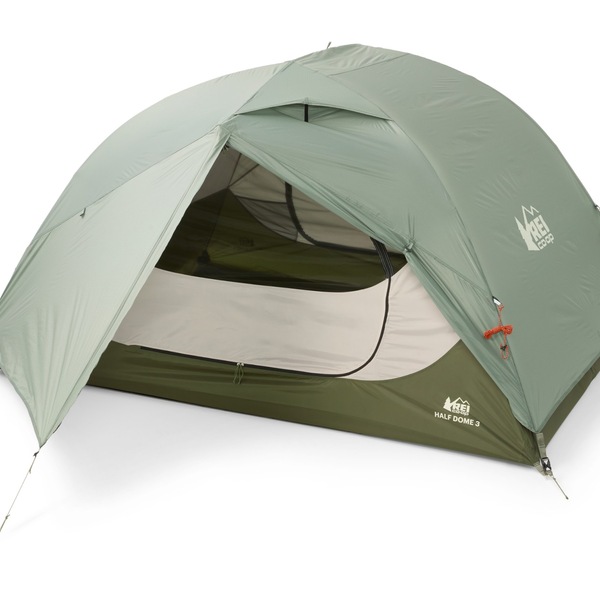
Size: 2, 2.5, and3-person sizes | Weight: 5 lbs. 15.1 oz. | Seasons: Three | Structure: Freestanding
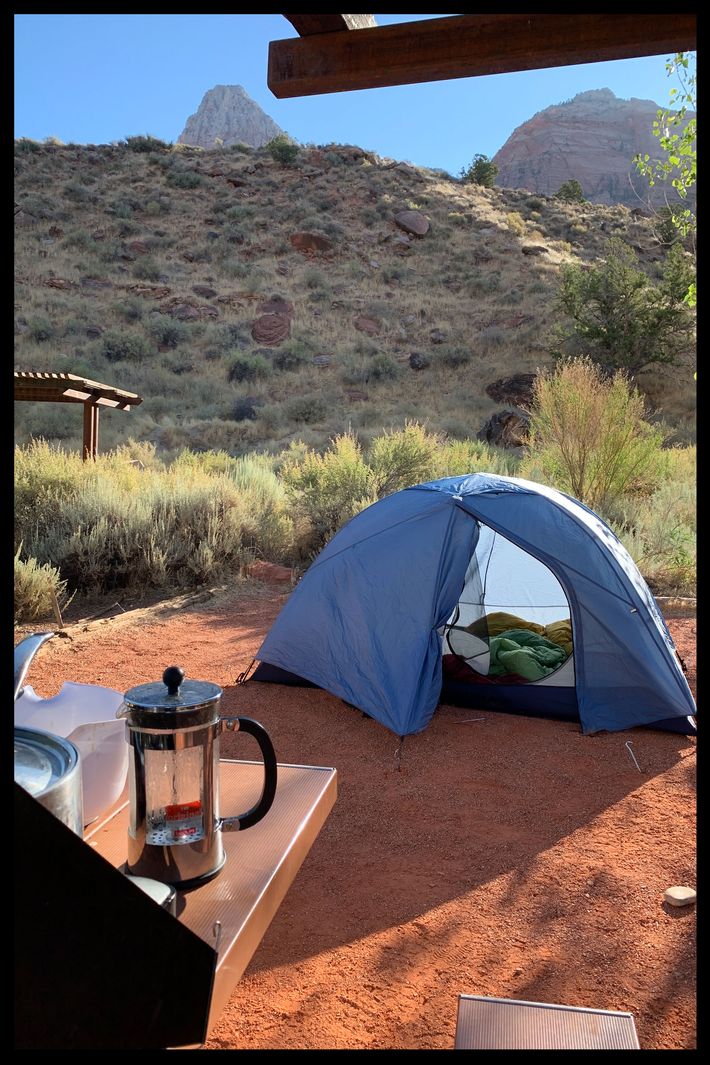
For our best overall tent, I looked for a relatively affordable but still well-made and durable shelter that would suit both car campers and backpackers across three seasons. REI Co-op’s longtime bestselling Half Dome, available in three size configurations, is the winner. I purchased mine around eight years ago, and since then have pitched it in more than 20 state and national parks across the country (including in snow with no issue). The poles have never splintered, and the fly remains ducks-back waterproof. Indeed, my beloved blue tent still looks brand new.
The Half Dome’s freestanding design is quick and easy to pitch (norelationship-ruining arguments with your co-camper, I promise), and this thing always fits into the bagwhen you roll it up. You can’t quite stand up straight while inside, but you can certainly move around comfortably. The two-door layout means that two people each get their own exit — no clambering over each other in the middle of the night. There’s plenty of ventilation and roomy-enough vestibules in which to keep your shoes and cooking gear out of the weather. Gerber describes the Half Dome as a backpacking tent that’s “on the lighter side but still has the look of a conventional tent, as opposed to a super-niche, specialized shelter.” Whether you’re tripping on shrooms at a music festival or overnighting after a long day’s hike in Harriman, it’s a reliable choice.
Best (more lightweight) camping tent
New! You can now save this product for later.
Size: 1, 2, 3, 4, and 5-person sizes | Weight: 3 lbs. 13 oz. (3-person) | Seasons: Three | Structure: Freestanding
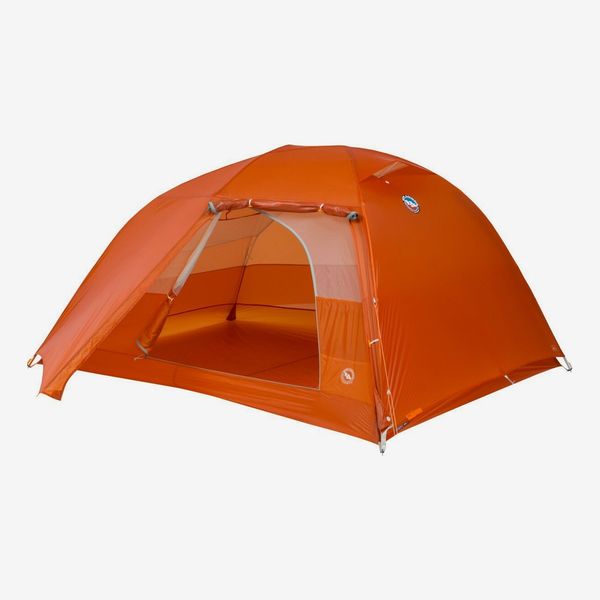
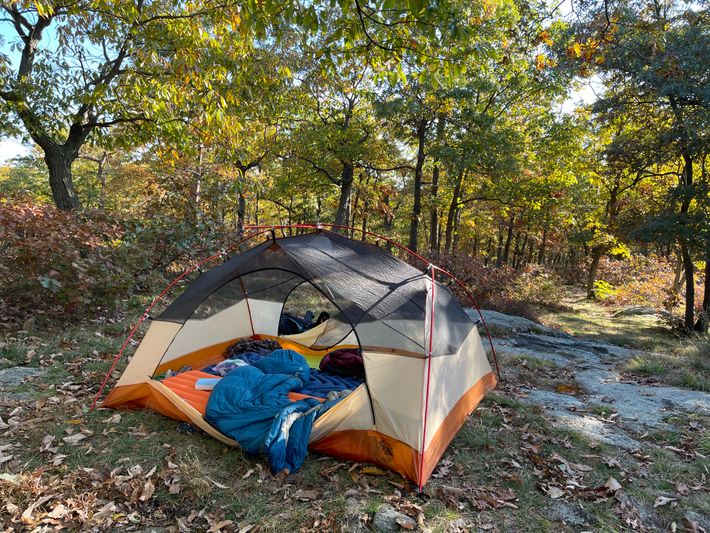
The Big Agnes Copper Spur would be my upgrade pick for people who are doing a mix of car camping and backpacking but just want to buy one tent for both activities. It’s a freestanding tent that’s just over half the weight of the Half Dome and almost as spacious with excellent waterproofing and hiker-friendly features that include the ability to stake out extra awnings with your trekking poles. Outdoor experts I’ve spoken with over the years have always praised Big Agnes for the durability and practicality of its tent designs; Oliver Brown, the founder of True Summit Adventures on Mount Kilimanjaro, told me that he camps around 50 nights a year and uses the brand’s three and four-season tents even at high-elevation in stormy conditions that theoretically require much sturdier shelters. I shared the three-person Copper Spur on an overnight backpacking trip with two friends, and we all had plenty of room to snooze away alongside our backpacks. Setup is simple, and there are lots of loops and pockets inside for hanging lamps and storing small items like head torches, phones, and gloves.
Best backpacking tent
New! You can now save this product for later.
Size: 1, 2, and 3-person sizes | Weight: 3 lbs. 6 oz. (3-person) | Seasons: Three | Structure: Freestanding
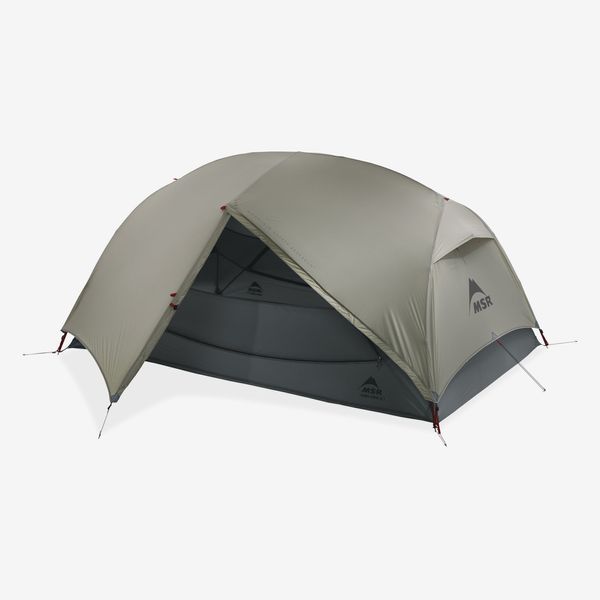
Hubba Hubba is a popular series of backpacking tents from outdoor-gear brand MSR, which also happens to make my favorite backpacking stove. Known for being quick and easy to pitch, even for one person, these lightweight yet generously sized backcountry tents are a perennial favorite among outdoorsy types who prioritize comfort. Both journalist and outdoor-gear reviewer Miyo McGinn and Yasmine Fuller, the lead digital-content specialist at Mast General Store in North Carolina, hike with the two-person version of this tent for maximum solo space. “My early camping memories were defined by frustrating tents that required at least two people to get the poles lined up just right,” Fuller says, but with the Hubba Hubba, she’s able to pitch her tent by herself with zero effort. And the quality of sleep it offers, she says, is exceptional: “I couldn’t be happier with my choice.” McGinn, meanwhile, slept in the two-person Hubba Hubba when working in the Olympic National Park backcountry. “I absolutely adore it,” she says of the tent. “My stuff and I stayed totally dry even when it rained for days straight in the wettest parts of the rainforest. And you can dry-pitch it, putting the poles and fly up and then pitching the tent under the fly so it never gets at all wet.” More lightweight and minimalist backpacking tents certainly exist (see below), but anyone planning on spending many consecutive nights of camping in uncertain weather conditions should consider investing in this sturdy fabric fortress.
Best (more lightweight) backpacking tent
New! You can now save this product for later.
Size: 2-person | Weight: 34 oz.| Seasons: Three| Structure: Freestanding
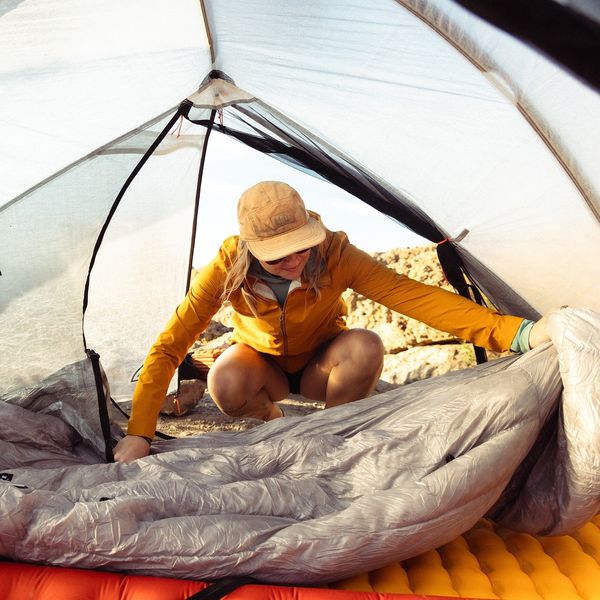
Most major tent brands now offer “ultralightweight” backpacking tents in an appeal to a growing market of fast-and-light hikers. These single-walled (read no rain fly) structures will allow you to carry a much smaller pack at the cost of certain comforts offered by the above tents. Some are freestanding, but many cleverly make use of trekking poles and guy ropes, rather than heavier shock-cord poles, to create tension. Two outdoor experts I spoke with, Field Mag founder Graham Hiemstra and Sawyer Products community director Katie Houston, pointed to Hyperlite Mountain Gear as one of the original and best ultralightweight tent brands — its highly packable shelter designs are now widely imitated. Houston likes the brand’s Unbound tent, which cannot be pitched without two trekking poles, whereas Hiemstra opts for the freestanding Crosspeak. If you’re planning on camping in uneven, sandy, or rocky terrain (where staking out ropes might prove tricky), the Crosspeak is a more versatile option. Note that ultralight tents are made from extremely thin yet waterproof technical fabric and can even hold their own against big storms when pitched correctly, but there’ll always be a little bit of condensation to deal with when you’re sleeping in a single-walled tent — tactical ventilation can help.
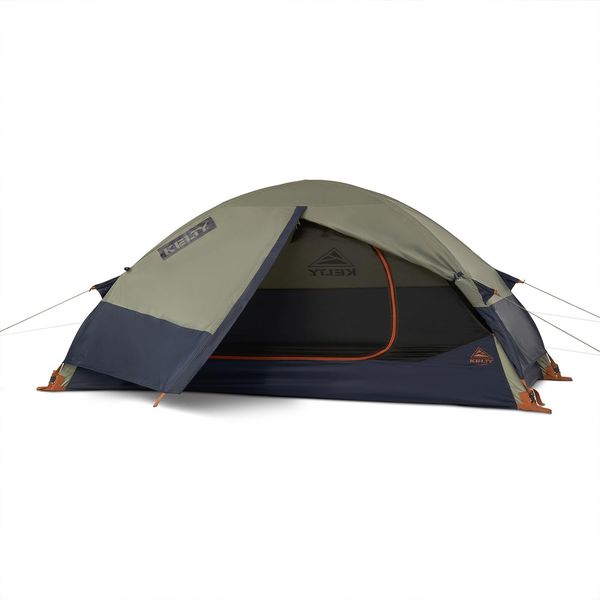
Best beginner backpacking tent
New! You can now save this product for later.
Size: 1-,2-, and 4-person | Weight: 3 lb. 12 oz.(1-person)| Seasons: Three| Structure: Freestanding
For anybody who is just getting into backpacking and doesn’t want to spend many hundreds of dollars on gear, I’d recommend a simple and not-too-heavy tent like Kelty’s Late Start. It performs very well for its price — on a five-day trek in notoriously rainy and windy Patagonia, mine held its own in open fields full of other people’s extremely expensive four-season shelters. Per the name, this tent pops up or down in just a couple of minutes, requiring only one pair of hands. I’ve never felt a drop of rain while sleeping inside of it, and while “roomy” would be an overstatement, the narrow shape stops a welcome few inches short of “coffinlike.” There’s even enough vestibule space out front to shelter a backpacking stove from the wind.
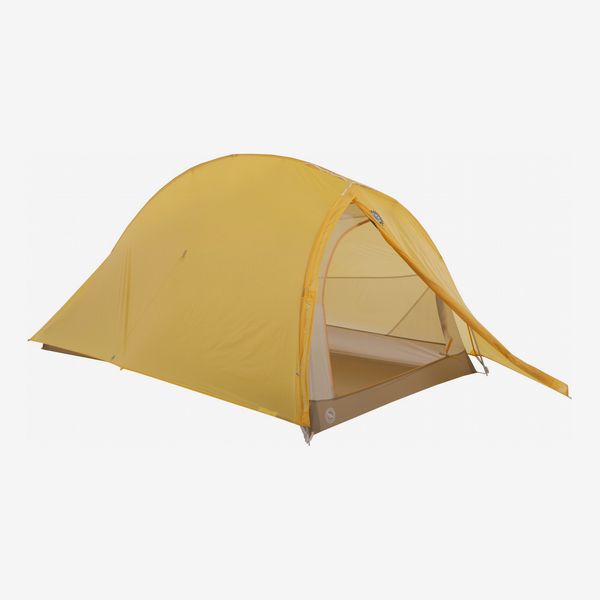
Best bikepacking tent
New! You can now save this product for later.
Size: 1-, 2-, and 3-person | Weight: 2 lb. 10 oz.(2-person) | Seasons: Three | Structure: Freestanding
Big Agnes’ bikepacking-specific designs were recommended by almost every expert I spoke to for our guide to bikepacking gear, including Andrew Onermaa, co-host of the Bikepack Racing Podcast, who calls them “phenomenal.” This one weighs just a couple pounds, comes with its own waterproof stuff sack, and features super-collapsible poles and lightweight stakes. Journalist and outdoor-gear expert Graham Averill uses his for both normal backpacking and bikepacking and says it offers “a decent amount of room” and is “big enough for a couple that knows each other well — with some handy storage hammocks in the ceiling for headlamps and stuff.” Freelance editor and writer Sal Vaglica also uses the Fly Creek for bikepacking solo missions but says it’s a tight squeeze for two adults plus gear: “It’s a splurge for space I’m willing to make as a bigger person. I don’t know where they think two people will fit into this thing who are not children, but it packs down to the size of a Yeti insulated bottle.”
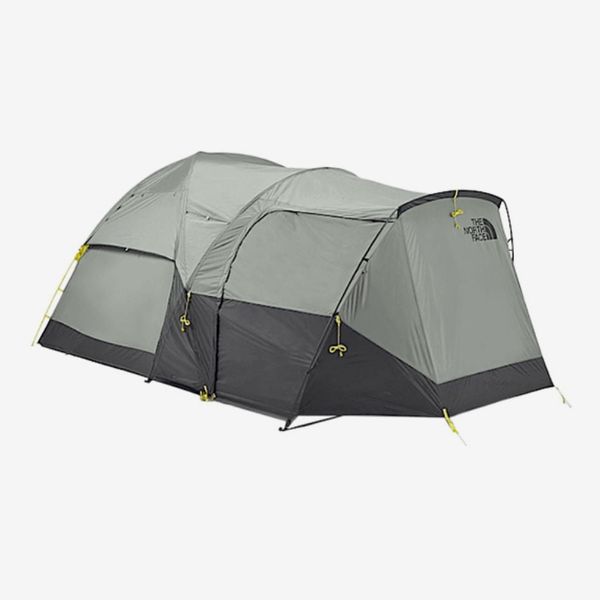
Best tent for car camping
New! You can now save this product for later.
Size: 4-,6-, and 8-person | Weight: 19 lbs. 6.4 oz.(6-person) | Seasons: Three | Structure: Freestanding
If you’re car camping rather than backpacking, especially with your family or a big crew of friends, you may as well purchase a big ol’ tent that everybody is able to stand up in. The North Face’s pleasingly oversize Wawona is an excellent choice, says Cool Travel Vibes founder Echo Wang. “If you’re car camping, size and weight aren’t really issues, so go at least one or two sizes up to have more room for people and gear,” she advises. “Prioritize headroom, ventilation, and storage.” Angela Berardino, founder of travel and outdoor PR firm Brouhaha Collective (which does not represent the North Face), says that in addition to being extremely weatherproof and durable, the Wawona is well laid out for lots of people of varying sizes. “For such a big tent, it’s crazy easy to set up and lighter than it looks,” she adds. It also offers lots of storage for “bikes, a portable potty for my kid, and all the gear you don’t want inside — it’s a second room.” (Want to save $50 or so? REI Co-op’s newer Westward design is suspiciously similar to the Wawona and comes at a slightly cheaper price. Hest founder Aaron Ambuske calls the Westward 6 his “favorite tent right now.”)
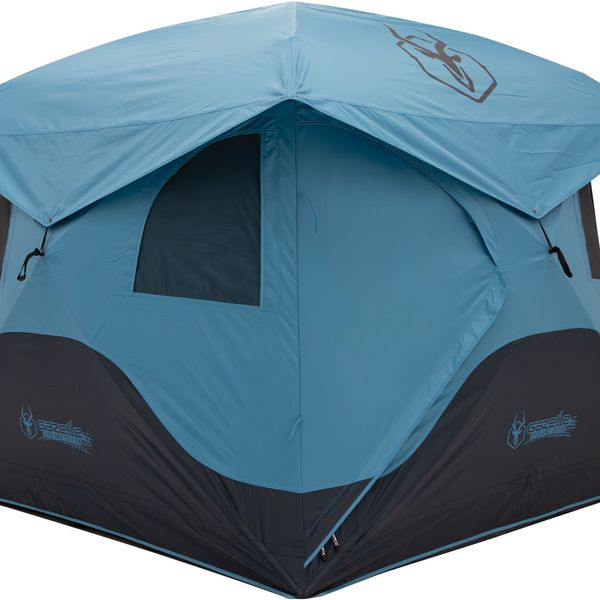
Best pop-up car-camping tent
New! You can now save this product for later.
Size: 4- and 8-person | Weight: 34 lbs.(6-person) | Seasons: Three | Structure: Freestanding
Another tall-person-friendly tent option is Gazelle’s pop-up Overland. This instant tent is absolutelycar-camping-only and ideal for families, says Wang: “It’s bulky and heavy but fast to set up, with no poles, and you can stand inside.” The tent has a towering peak height of 78 inches, as well as a removable floor for easy cleaning. Its thick polyester fabric and tightly netted windows protect from rain, wind, dust, and bugs.
Best (less-expensive) pop-up car-camping tent
New! You can now save this product for later.
Size: 6-,9-, 10-, and 12-person | Weight: 23 lbs.(6-person) | Seasons: Three | Structure: Freestanding
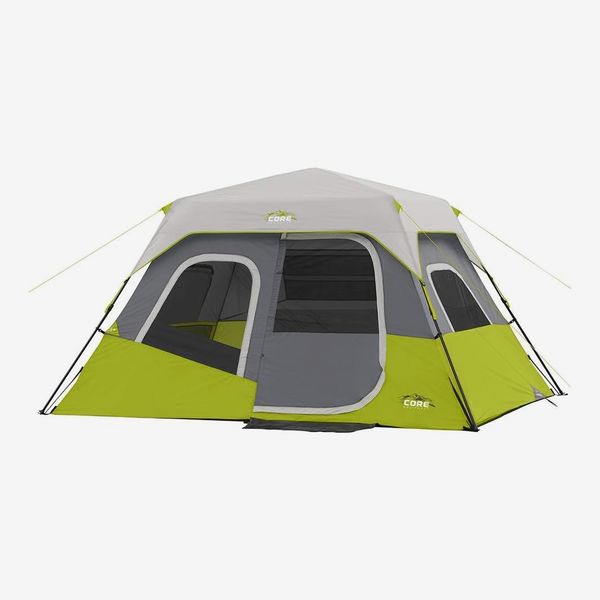
For a cheaper family-camping option that’s similarly easy to set up, Wang also likes the CORE 6 Person Instant Cabin Tent. “We used it on a trip with a lot of rain, and it held up and stayed completely dry,” she says. “Setup is straightforward and quick, even solo — on a recent girls’ trip, I pitched it by myself, and it was honestly a breeze.” The six-person configuration can fit two queen-size air mattresses, which sounds rather luxurious to me, a frequent backpacker.
Best all-season tent
New! You can now save this product for later.
Size: 3- and 4-person | Weight: 9 lb. 4 oz.(3-person)| Seasons: Four | Structure: Semi-freestanding
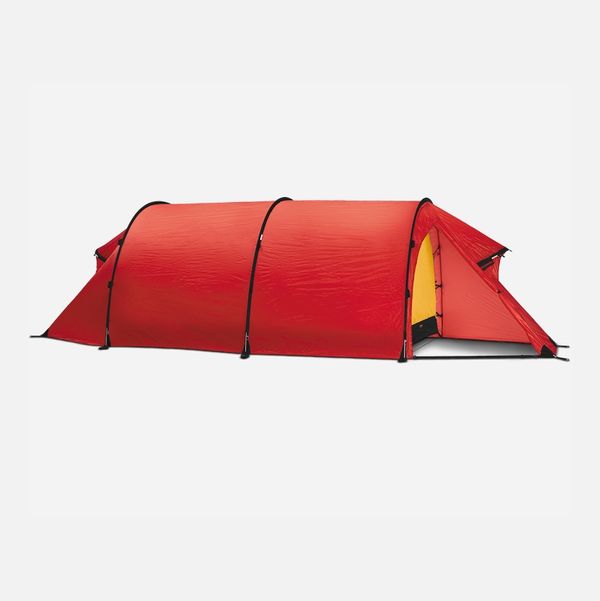
Carl Donohue, owner of Expeditions Alaska, has been guiding backcountry camping trips for 25 years. For anyone regularly embarking on adventures in the colder months, or just looking for a true buy-it-for-life tent that’s designed to endure, he recommends investing in a design from Swedish brand Hilleberg. “Their Keron 3 is a superb all-round tent with a super-luxurious vestibule” that’s large enough to store your bike and other gear, he says. And it “withstands the roughest weather anybody might want to camp in.” I’ve long coveted one of Hilleberg’s (rather pretty-looking, as well as practically designed) tents myself, but they aren’t for everyone. As it isn’t completely freestanding, the Keron’s tunnel-shaped design is certainly not for beginners — and truly, if you’re a newbie camper, winter probably isn’t the time to start sleeping outside.
Our experts
• Graham Averill, freelance journalist and outdoor-gear reviewer
• Angela Berardino, founder, Brouhaha Collective
• Oliver Brown, founder, True Summit Adventures
• Carl Donohue, owner, Expeditions Alaska
• Yasmine Fuller, lead digital-content specialist, Mast General Store
• Katie Gerber, Colorado-based wilderness guide and author of Adventure Ready: A Hiker’s Guide to Planning, Training, and Resiliency
• Miyo McGinn, freelance journalist and outdoor-gear reviewer
• Jeremy Rellosa, associate editor, the Strategist
• Ebony Roberts, freelance journalist and outdoor-gear reviewer
• Sal Vaglica, freelance editor and writer
• Echo Wang, founder, Cool Travel Vibes
The Strategist is designed to surface the most useful expert recommendations for things to buy across the vast e-commerce landscape. Some of our latest conquests include the best women’s jeans, rolling luggage, pillows for side sleepers, ultraflattering pants, and bath towels. We update links when possible, but note that deals can expire and all prices are subject to change.
Every editorial product is independently selected. If you buy something through our links, New York may earn an affiliate commission.