The 23 Very Best Sunscreens for Your Face
Including options for sunscreen-phobic acne sufferers.

In this article
After years of beauty reporting and countless conversations with dermatologists and estheticians, I’ve learned that sunscreen is a nonnegotiable, year-round thing. It’s a daily must-do, right up there with washing your face. Nearly every skin concern can be exacerbated by not wearing SPF. It helps with everything from hyperpigmentation to fine lines to acne, and protects skin from sun damage, which can lead to a host of other problems. Dr. Jennifer Stein, a dermatologist at NYU Langone Health, says everyone should generally look for sunscreens with broad-spectrum coverage (which protects against UVB rays that cause burning and UVA rays that cause lasting damage) and an SPF of 30 or higher, and she notes that a high SPF doesn’t mean you can go hours without reapplying. You should always reapply sunscreen after every two hours in the sun, Stein says, even if you don’t burn easily.
This can be tricky, though, especially if you’re prone to breakouts or have sensitive skin. To find the best facial sunscreens, I’m testing out several different formulas over the next few months. You’ll find results from those hands-on trials below. I also asked Stein and 11 more dermatologists and skin-care professionals to weigh in on sunscreens for different skin types and activities. (Their recommendations inform which formulas I test.) And remember: These sunscreens should be used in addition to hats and protective clothing, and wearing any of them doesn’t excuse you from spending time in the shade, since no sunscreen can completely prevent sun damage.)
Updated on September 7, 2025
We checked stock and updated pricing for every sunscreen on our list.
Our top picks
What we’re looking for
SPF level
SPF — or sun protection factor — is the measure of how much UV radiation is required to cause a sunburn. The higher the SPF, the less likely you are to burn. It’s important to note that SPF doesn’t relate to time spent in the sun but rather references the amount of solar energy, so reapplication depends on the intensity of the sun. To put it simply: You need to reapply more often during the middle of the day, when the sun is at its peak, than, say, 9 a.m., when the sun is less intense. As we mentioned before, a high SPF doesn’t mean you can stop reapplying. Instead consider what your skin might need. Fairer skin needs a higher SPF to protect the skin, while darker skin tones (which have a built-in SPF of around 13.4) can use a lower SPF (think SPF 30) and still be protected. Another note: SPF only refers to UVB rays, but it’s best to look for a broad-spectrum sunblock, which will protect skin from both UVA and UVB rays.
Chemical or mineral
There are two types of sunscreen filters: chemical and mineral. Chemical sunscreens use organic materials like oxybenzone, avobenzone, homosalate, octinoxate, octocrylene, and octisalate to offer sun protection. These work by absorbing the sun’s rays, turning it into heat, then releasing said heat through skin. This process takes about 15 minutes, so if you’re using chemical sunscreen filters, then you should be giving yourself at least that much time before heading outdoors. Because of their properties, chemical filters tend to be more cosmetically elegant and can be formulated into lightweight moisturizers and oils. There are a few drawbacks with chemical sunscreens. The first: They need to be applied more often than mineral sunscreens because they’re not photostable and break down upon exposure to UV light. Second, there have been studies suggesting that chemical sunscreen ingredients like oxybenzone and octinoxate can seep into water while you swim and bleach coral reefs. Some chemicals have been linked to endocrine disruption, although the data isn’t conclusive. Chemical sunscreens tend to be more irritating, as allergies to the active ingredients are more common.
Mineral sunscreens act as a physical barrier between you and UV rays, scattering the light when it hits your skin. There are two main ingredients that act as physical blockers — titanium and zinc oxide. These block a wide range of UV wavelengths and are photostable, meaning you don’t have to reapply as frequently (though you should still stick to the two-hour rule). Titanium and zinc oxide are well tolerated by all skin types, including sensitive, and less likely to cause a reaction. The zinc oxide is a key component in preventing hyperpigmentation, so it’s often recommended by dermatologists for patients with melasma or dark marks. In contrast to chemical sunscreens, physical filters aren’t as smooth or lightweight. They tend to leave a white cast on skin, which makes it challenging for deeper skin tones. Mineral formulas have come a long way thanks to zinc nanoparticles, which rub in more easily.
To get the benefits of both, you can opt for a hybrid formula, which contains chemical and mineral filters.
Contains oxybenzone, homosalate, and octisalate
The CDC has been keeping an eye on oxybenzone for a few years now. The popular chemical has been shown to absorb through the skin, and there have been concerns that it’s an endocrine disruptor, after a few studies showed lower levels of testosterone in teenage boys and an increased risk of endometriosis in women. Currently the European Commission (which is known for having stricter regulations on cosmetics and skin care than the U.S.) caps the oxybenzone concentration at 6 percent, though all sunscreens don’t note the concentrations on the label, so it’s difficult to be sure. Homosalate and octisalate have been identified as possible endocrine disruptors, but there have been less findings on these ingredients and their effects. If this concerns you, it’s definitely something to keep in mind; however, these ingredients (and other chemical sunscreen ingredients) haven’t at present been deemed unsafe for use.
Consistency
Consistency is important when it comes to sunscreen, because thickness can impact the way it sits on your skin. Someone looking for a formula that won’t feel heavy or greasy might opt for a lightweight formula, while someone with dry skin might want a thicker, more nourishing sunscreen.
Best sunscreen overall
New! You can now save this product for later.
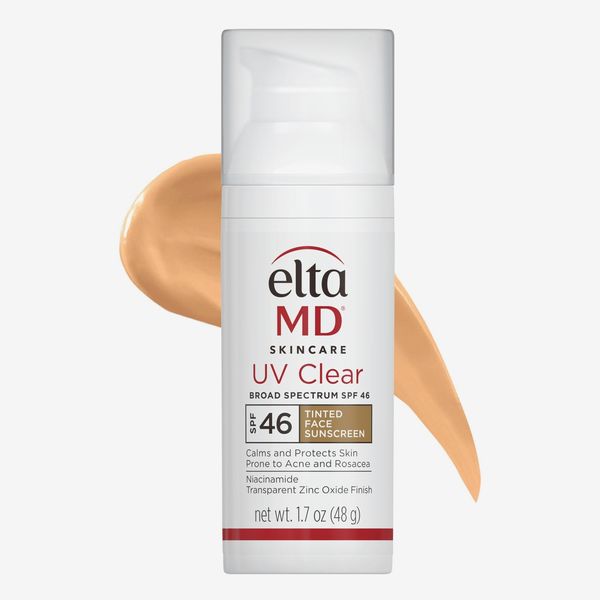
SPF level: SPF 46 | Chemical or mineral: Hybrid | Consistency: Lightweight lotion
After many years of the EltaMD UV Clear reigning supreme,ithas been dethroned by the brand’s tinted formula (not a major departure, I know). The tinted version has the same ingredients as the beloved clear but with some additional pigment, which makes it a better option for deeper skin (though if you have very deep skin, I would recommend patch-testing before slathering it all over). I like that it has a silky, lightweight feeland disappears after rubbing it in for a few moments. And once on, my skin feels a bit more hydrated, complementing my moisturizer. I’m also a fan of the ingredients list. The EltaMD utilizes both chemical and physical SPF, so you get the silky feel that’s often associated with chemical SPF along with the physical SPF, which, in addition to blocking a wide range of UV rays, also helps with hyperpigmentation. It also contains additional antioxidants and niacinamide, a vitamin-B3 derivate with anti-inflammatory properties that can help with breakouts. Beyond being my best-overall pick, it’s also a hit with dermatologists. Dr. Marnie Nussbaum likes it so much she wears it every day. Dr. Patricia Wexler of Wexler Dermatology says her patients love it because it doesn’t feel greasy like traditional sunscreen. In addition to being fragrance-free and noncomedogenic, EltaMD’s sunscreen is especially effective because it’s rich in antioxidants that help protect against skin-damaging free radicals, Wexler says. Dr. Jennifer MacGregor of Union Square Laser Dermatology appreciates that it’s “lightweight and oil-free, so it won’t clog pores,” and Dr. Dendy Engelman of Shafer Clinic Fifth Avenue points out that the formula contains “lactic acid, which will gently exfoliate the skin and regulate sebum buildup,” keeping breakouts at bay. It should be noted, though, that because of the octinoxate, this one isn’t reef-safe, so while it might be great as an everyday option, I would switch to something reef friendly if you’re swimming in the ocean.
Best less expensive sunscreen
New! You can now save this product for later.
SPF level: SPF 50 | Chemical or mineral: Chemical| Consistency: Lightweight lotion
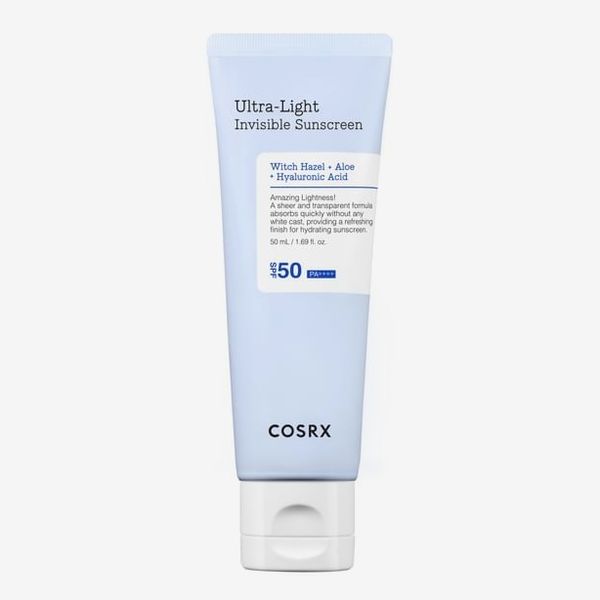
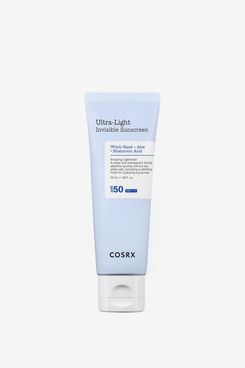
While sub-$40 isn’t unthinkable for a sunscreen, it isn’t exactly affordable, especially if you’re regularly going through tubes. I’m a fan of this sunscreen from CosRx, which I’ve been using daily for the past few months. True to its name, it has an ultralight feel and a slightly bouncy texture. It’s somewhere between a gel moisturizer and a rich cream — like a serum — and doesn’t feel heavy on the skin. I also like that it gives my skin a little glow but doesn’t leave it feeling greasy. It absorbs pretty quickly after application, and so far I haven’t dealt with any breakouts from incorporating it into my routine. If anything, I think it’s helping to keep my post-acne hyperpigmentation in check and supporting the rest of my actives. The main ingredients (beyond SPF) are witch hazel and aloe, which help to soothe inflammation and irritation. There’s also some niacinamide in there, which helps to brighten and even skin over time. It’s also an ideal combination if you’ve spent a day in the sun, so I’ll be keeping it close over the next few months. The one drawback of this sunscreen is that it’s a little harder to purchase because of the restrictions on Korean sunscreens in the U.S. Sunscreen filters have to be FDA approved, and at the moment many of the filters used in sunscreens produced in South Korea and the EU aren’t approved here. With that said, these sunscreens aren’t erroneously formulated. They’ve been validated by other regulatory bodies outside of the U.S. like the International Organization for Standardization, which confirm it’s ability to shield skin from UV rays. At present, the FDA is reviewing new sunscreen filters (this process has been going on for years), so I’ll be updating this story as that changes.
Best mineral sunscreen

New! You can now save this product for later.
SPF level: SPF 50 | Chemical or mineral: Mineral | Active ingredients: Zinc oxide and titanium dioxide | Consistency: Lightweight lotion
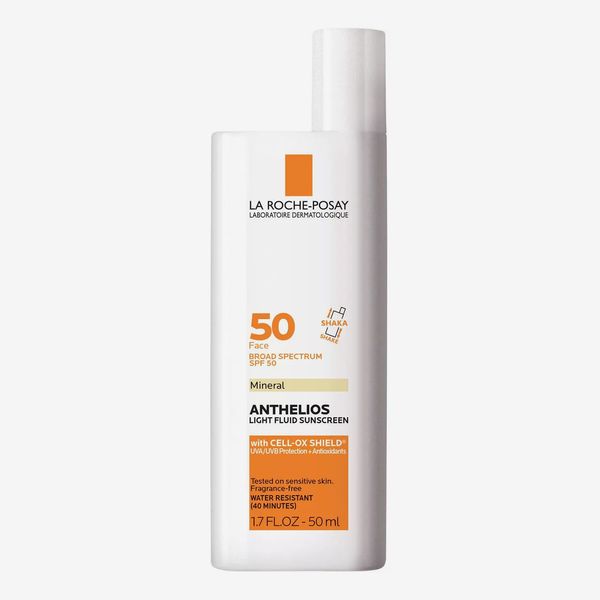
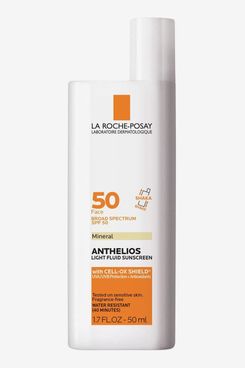
There are a lot of reasons to opt for a mineral formulation. As I said above, mineral blockers sit on top of the skin and deflect the sun’s rays, creating a physical barrier between your skin and UV light. Mineral formulas are great if you’re trying to combat hyperpigmentation and melasmaor prevent new dark marks from forming. My recommendation for this is the ultra-lightweight La Roche-Posay Anthelios sunscreen, which manages to be whisper-light and moisturizing at the same time. As soon as you apply it it sinks into the skin and you forget it’s there. Strategist contributor and longtime beauty writer Hannah Morrill told us she loves this sunscreen from La Roche-Posay for her face, which comes in both chemical and mineral formulations.Three other experts recommend it, too, with dermatologist Yoram Harth saying “I like the La Roche-Posay because it’s suitable for the face and body. It contains vitamin E, herbal extracts, and antioxidants to soothe stressed-out skin and shield you from the sun.” It has a lightweight, matte finish, so it goes on nicely under makeup too.

Best chemical sunscreen for melanin-rich skin
New! You can now save this product for later.
SPF level: SPF 30 | Chemical or mineral: Chemical | Contains oxybenzone, homosalate, and octisalate: Avobenzone 3%, homosalate 10%, octisalate 5% and octocrylene 2.75% | Consistency: Lotion
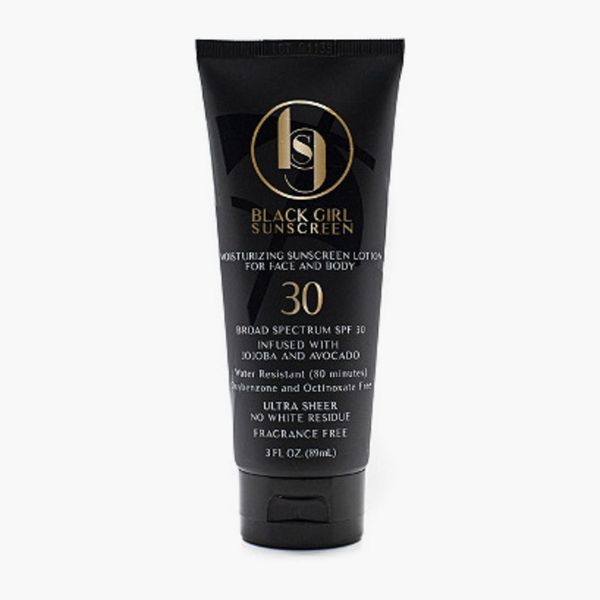
Even though I love the EltaMD, nothing beats Black Girl Sunscreen for daily use. It has a thick, lotionlike texture and imparts a glowy sheen that rivals my Victoria Beckham x Augustinus Bader moisturizer. Although it works well for me, it can be a bit heavy for oily skin types (the brand does make a mattifying formula), which is why I recommend it for normal-to-dry skin.Once applied, it dries down completely clear and is really moisturizing thanks to ingredients like avocado, jojoba, and sunflower oils along with carrot juice, which contains vitamin C to help brighten the complexion.
Best mineral sunscreen for melanin-rich skin
New! You can now save this product for later.
SPF level: SPF 50 | Chemical or mineral: Mineral | Consistency: Lotion
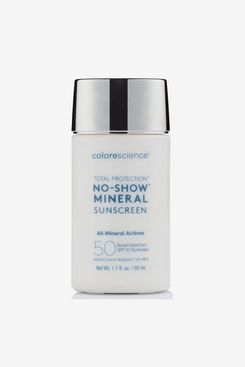
Finding a mineral sunscreen that doesn’t leave a white cast is tricky because mineral filters tend to be chunky and leave a purplish-white hue. This becomes more noticeable on darker skin tones, making mineral options limited.There’s been lots of improvement in recent years as mineral particles have gotten smaller, producing a crop of mineral sunscreens that rival the look and feel of their chemical counterparts.Dr. Melanie Palm, a dermatologist, likes this one from Colorescience (makers of our favorite powder sunscreen), which she says uses “extremely small particle zinc.” This makes it completely transparent, says Palm, even on very deep skin tones. She also likes mineral options for acne-prone skin in particular. “Zinc oxide acts as an anti-inflammatory, does not aggravate acne, and perhaps helps it,” she says. Although it’s designed for the face (evidenced by the small size), Palm recommends it for all over. “It offers beautiful coverage and is lightly moisturizing,” she says.
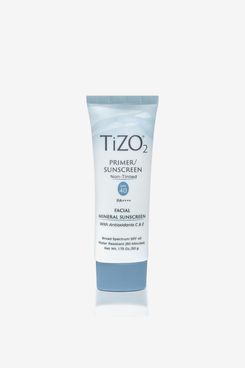
Best mineral sunscreen for acne-prone skin
New! You can now save this product for later.
SPF level: SPF 40 | Chemical or mineral: Mineral | Consistency: Liquid
For acne sufferers, chemical filters might not be the move. The active ingredients can be irritating for some, so a mineral sunscreen is likely your best bet. You’ll also want to look for a light liquid formula, which Stein recommends. “Liquid is just not as thick, so it’s less likely to clog your pores,” she says. Tizo, which we’ve written about before, ticks both boxes. Dr. Nava Greenfield of the Schweiger Dermatology Group is a fan of the formula because it’s “really gentle on acne” and has a silky-smooth feel that will work for oily skin. I like that it contains active ingredients like vitamins E and C, which help with brightening skin and lightening hyperpigmentation over time. Acne and hyperpigmentation often go hand in hand, so the added actives will address old dark marks while also making sure you don’t get any new ones. It also comes in a tinted formula, a good option for anyone concerned about it leaving a white cast.
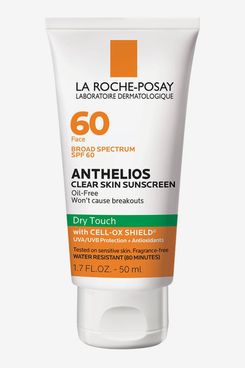
Best chemical sunscreen for acne-prone skin
New! You can now save this product for later.
SPF level: SPF 60 | Chemical or mineral: Chemical | Contains oxybenzone, homosalate, and octisalate: Homosalate 15% and octisalate 5% | Consistency: Lightweight lotion
Mineral sunscreen may sound ideal for acne-prone skin, but it’s not as good at protecting skin from UVA and UVB rays unless there’s a high concentration of zinc oxide — at least 20 percent. Chemical sunscreens offer better protection thanks to filters like avobenzone. And that’s a main ingredient in this oil-free sunscreen, Anthelios. The formula has also been tested on sensitive skin and should work well for acne-prone skin, too.
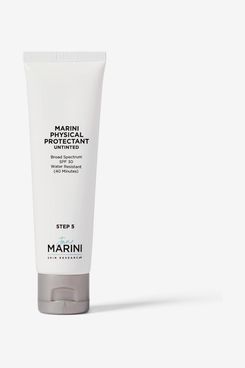
Best mineral sunscreen for oily skin
New! You can now save this product for later.
SPF level: SPF 60 | Chemical or mineral: Mineral | Consistency: Lightweight lotion
If the concern is excess oil, I’d recommend this sunscreen from Jan Marini, which contains “microscopic sponges” that help to absorb it. It’s also ultralightweight, an ideal consistency for oily-skin types. According to Kim Zimmerman, the director of e-commerce and marketing at Rescue Spa, the Jan Marini sunscreen is a hit among Rescue Spa aestheticians, who often recommend it to their clients with oily complexions. They like that it has a slight tint and a matte finish that doesn’t leave skin looking greasy.
Best chemical sunscreen for oily skin

New! You can now save this product for later.
SPF Level: SPF 50 | Chemical or mineral: Chemical | Active ingredients: Avobenzone 3%, Homosalate 5%, Octisalate 5%, Octocrylene 9% | Consistency: Gel
Supergoop recently reformulated its flagship product Unseen Sunscreen, and overall it has improved. This new formula has restored my faith in the sunscreen and its standing as the best option for oily skin. The texture is better, it’s less slippery, dries quicker, has a higher SPF factor (up from 40 to 50), and has a little more grip. I like it better, and when I put it head-to-head against the Glossier Invisible Shield, the Supergoop once again came out on top. It’s less velvety than the Glossier but still sits nicely on the skin and has a whisper-thin finish that is invisible once dry.
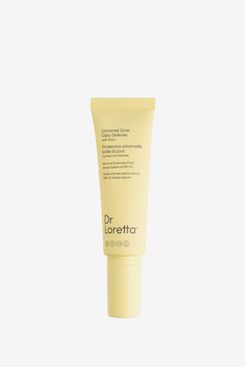
Best mineral sunscreen for dry skin
New! You can now save this product for later.
SPF level: SPF 40 | Chemical or mineral: Mineral | Concentration: Zinc oxide, 17% | Consistency: Moisturizer
For a hydrating nourishing option, esthetician and founder of Stalle Studios Elizabeth Hand recommends this sunscreen from Dr. Loretta, which she uses daily. “The formulas are next level,” she says. The tinted formula is also fairly universal and works well for a wide range of skin tones. “She spent part of her career working the creator of the Fitzpatrick Scale, the universal classification system used to categorize human skin pigmentation and its response to UV light exposure, so she knows a thing or two about SPF,” says Hand. Shanna Shipin at The Cut is also a fan: “It’s so effective at hydrating like a barrier-protecting moisturizer that it feels like the 40 SPF is a delightful by-product rather than the whole point.”
Best chemical sunscreen for dry skin
New! You can now save this product for later.
SPF level: SPF 46 | Chemical or mineral: Chemical | Concentration: Avobenzone 3%, homosalate 7%, octocrylene 9%, octisalate 5% | Consistency: Lightweight moisturizer
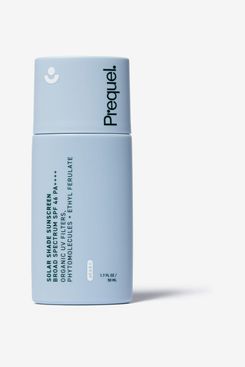
When choosing a sunscreen for dry skin, I always look for a formula that’s nourishing but not heavy. Dry-skin types tend to already layer on lots of moisture-rich products so I don’t recommend a gloopy, thick, sunscreen that just sits on top of theskin. I’m a fan of this sunscreen fluid from Prequel, which has a lightweight consistency and can be layered to achieve full coverage without feeling gunky or uncomfortable and has a radiant finish. It contains rice-derived antioxidants that help protect from oxidative stress, along with microalgae and ethyl ferulate, a derivative of ferulic acid that dissolves in fat and soothes the skin.
Best sunscreen for mature skin
New! You can now save this product for later.
SPF Level: SPF 50 | Chemical or mineral: Mineral | Consistency: Lotion
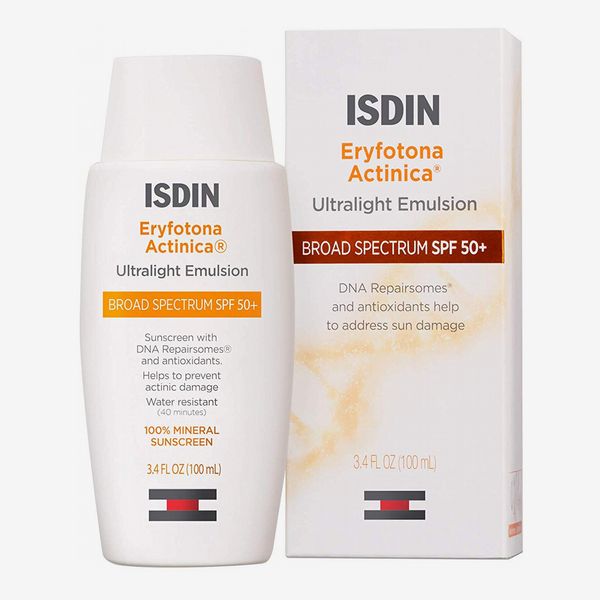
Any good sunscreen will protect against wrinkles, fine lines, and dark spots caused by sun exposure, but Dr. Francesca Fusco of Wexler Dermatology likes that this one will actually work to reverse existing sun damage. She says it’s “spiked” with antioxidants and photolyase enzymes, which have “been shown to reverse the specific DNA mutations caused by ultraviolet [light].” MacGregor calls the brand’s sunscreens “elegant formulations that combine skin-protecting, anti-aging ingredients with your daily SPF.” Nussbaum is a fan too. “It has vitamin E as well, so it blends in really nicely,” she says. Dr. Corey L. Hartman, founder of Skin Wellness Dermatology, frequently recommends this sunscreen, which he uses on himself. According to Hartman, it works well for all skin types and most skin tones. “It doesn’t leave a white or iridescent cast,” he says. “It disappears into my skin and doesn’t make me oily.” If you find that this one doesn’t disappear completely, Robinson recommends using the tinted formula instead.
Best mineral sunscreen for sensitive skin
New! You can now save this product for later.
SPF Level: SPF 30 | Chemical or mineral: Mineral | Consistency: Lotion
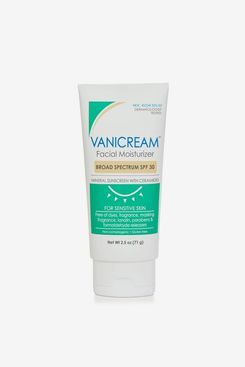
While mineral sunscreens are generally sensitive-skin friendly, some contain fragrance or ingredients that could potentially irritate skin. For a product that’s truly free of irritants, I recommend Vanicream, a favorite of dermatologist Brendan Camp. The lightweight sunscreen is packed with nourishing ceramides and formulated without fragrance, dyes, parabens, or botanical extracts. On the SPF front, it has an SPF factor of 30 and uses non-nano zinc oxide to protect skin from the sun’s rays.
Best sunscreen for blue light
New! You can now save this product for later.
SPF Level: SPF 50 | Chemical or mineral: Chemical | Contains oxybenzone, homosalate, and octisalate: Avobenzone 3%, Homosalate 9%, Octisalate 5%, Octocrylene 9% | Consistency: Lightweight lotion
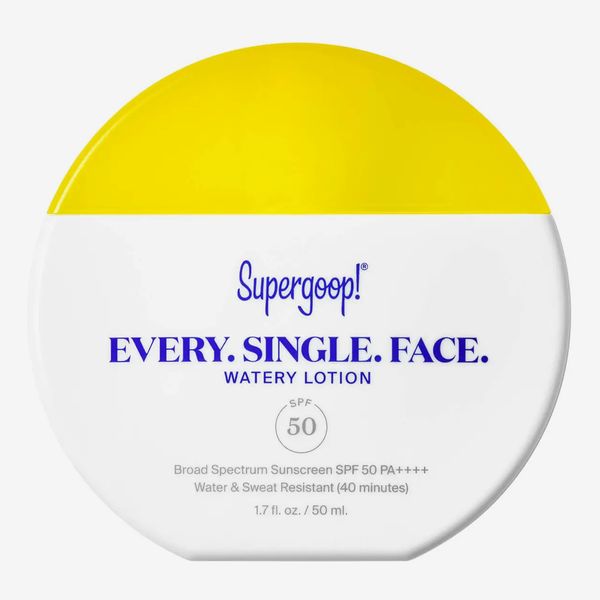
This lightweight sunscreen from Supergoop! is a favorite for everyday wear, especially if I’m applying some kind of tinted moisturizer on top. It melts into my skin almost instantly and leaves behind a noticeable glow. In addition to a high SPF of 50, it contains environmental-stressor-fighting ingredients like cress-sprout extract — known for fighting skin discoloration and brightening overall tone. Here, it’s used to support the skin’s barrier and lessen the effects of pollution. It contains wild-butterfly-ginger root, which helps to filter out blue light — ideal if you spend most of your day staring at a screen like I do.
Best sunscreen for exercising outdoors
New! You can now save this product for later.
SPF level: SPF 50 | Chemical or mineral: Mineral | Consistency: Stick
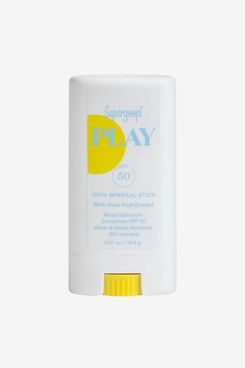
If you’ve ever put on sunscreen before a run, you’re probably familiar with the stinging sensation in your eyes as the sunscreen drips down your face. According to Stein, “a stick is a good way to get a sunscreen that doesn’t run as much.” Nussbaum suggests this stick from Supergoop! which is “mineral based and doesn’t tend to run.” It contains olive-fruit extract, so it’s moisturizing.
Best mineral sunscreen for swimming
New! You can now save this product for later.
SPF level: SPF 50 | Chemical or mineral: Mineral | Consistency: Lightweight lotion
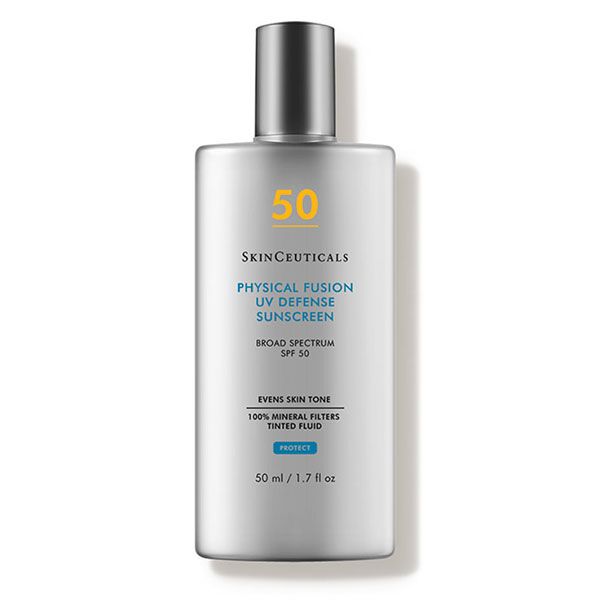
Proven to be water resistant for up to 40 minutes (around the time you’d want to reapply after swimming anyway), SkinCeuticals’ physical sunscreen comes recommended by both Nussbaum and dermatologist Dr. Jared Jagdeo, the medical director of Ever/Body. It’s one of Jagdeo’s top picks because, as he says, it features “zinc oxide and titanium dioxide, natural minerals that protect skin from ultraviolet, visible, and infrared light in our environment.” It tops Nussbaum’s list for easily absorbing into the skin without a greasy feel.
Best sunscreen for reapplication
New! You can now save this product for later.
SPF level: SPF 50 | Chemical or mineral: Mineral | Consistency: Powder
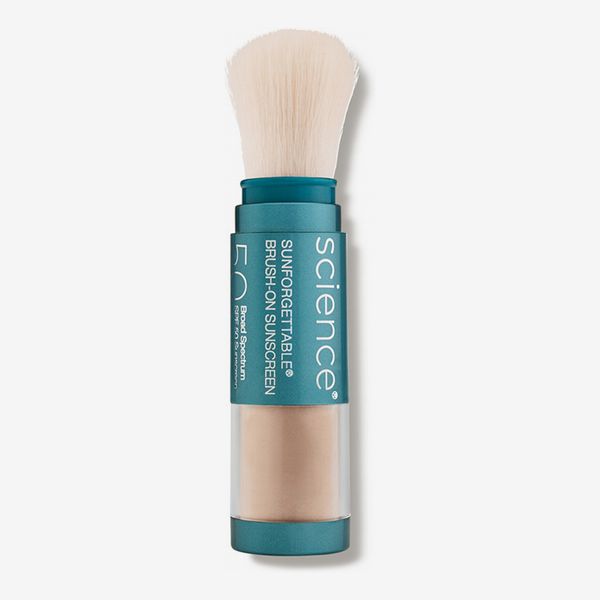
This powder sunscreen from Colorescience can be used under or over makeup. The brush-on formula comes recommended by Engelman, who says it “can absorb excess oil and be used throughout the day.” It’s available in a handful of shades to blend with your skin tone, and since it’s a powder and not a cream or lotion, it always leaves a matte finish.
Best compact-powder sunscreen
New! You can now save this product for later.
SPF level: SPF 68 | Chemical or mineral: Mineral | Active ingredients: Titanium dioxide 8.4%, zinc oxide 10% | Consistency: Pressed powder
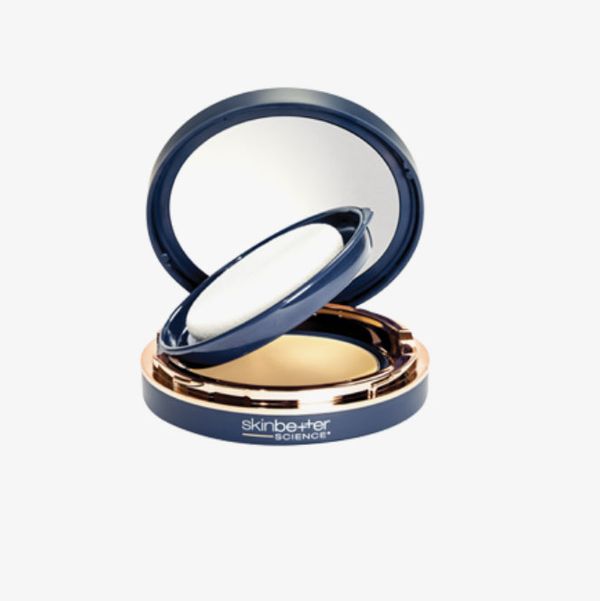
If you prefer compact-powder makeup, there is this one from SkinBetter. It’s a 100 percent mineral foundation with UVA and UVB protection that’s water resistant for up to 80 minutes. It also has an SPF of 68, making it the highest on this list. We’ve written about it before as it protects against blue light from our devices and is a favorite of writer Kaleigh Fasanella, who has really sensitive skin. Unlike the Colorescience brush-on, this one comes in only one shade, but according to Fasanella, it “adapts to your skin tone for perfect coverage, plus it comes in a beautiful compact you can easily carry in your makeup bag and reapply as needed.”
Best sunscreen stick
New! You can now save this product for later.
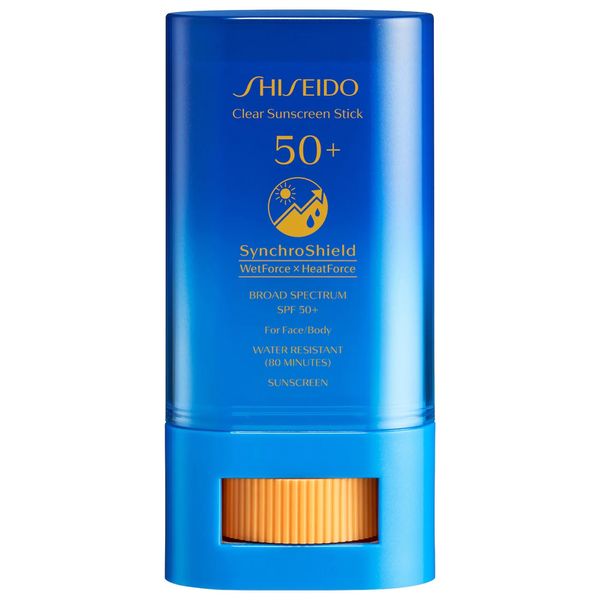
SPF level: SPF 50 | Chemical or mineral: Chemical | Consistency: Stick
Another good way to reapply (provided you’re not worrying about disturbing face makeup) is using a sunscreen stick. This one from Shiseido is a favorite of Strategist writer Ambar Pardilla, who likes that it’s not “gloopy,” like liquid SPF. “This one feels like i’m rubbing highlighter all over my face, in that impossibly dewy way,” she says. “And since it’s a stick, I can really get the sides of my nose, underneath my eyebrows, along my ears, and roll it around my neck.” Though Pardilla uses it on its own, I recommend layering it over another SPF because most people (including myself) apply too little when using a stick on its own.
Best sunscreen serum
New! You can now save this product for later.
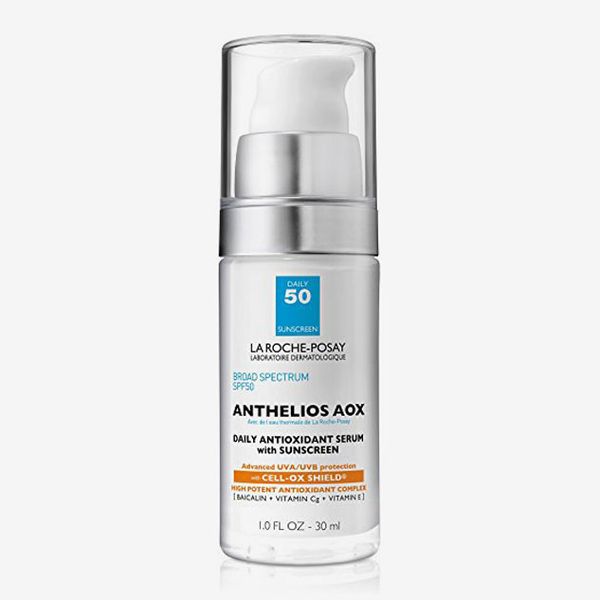
SPF level: SPF 50 | Chemical or mineral: Chemical | Contains oxybenzone, homosalate, and octisalate: Avobenzone 2.68%, homosalate 9.6%, octisalate 2.88%, octocrylene 5.38%, oxybenzone 3.46% | Consistency: Serum
If you’re in search of something a little more lightweight, there are sunscreen serums like this one from La Roche-Posay. It has an SPF of 50 and contains antioxidants like vitamins C and E, which help to fight free radicals. Because of its thin texture it wears well under makeup and won’t be greasy or oily on the skin.
Best less-expensive sunscreen serum
New! You can now save this product for later.
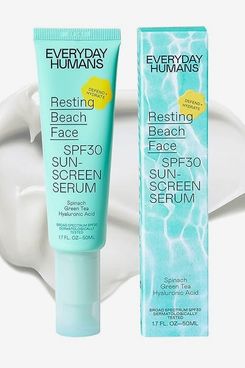
SPF level: SPF 30 | Chemical or mineral: Chemical | Contains oxybenzone, homosalate, and octisalate: Avobenzone 3%, homosalate 8%, octisalate 4%, octocrylene 2%, | Consistency: Serum
For a near-$20 option, Strategist senior editor Ailbhe Malone loves this sunscreen serum, which she started using at the recommendation of her facialist. “It’s unscented, really quenching, and even though it’s only factor 30, I’ve never had a reaction to the sun while wearing it,” she says. The nourishing feel comes from a blend of hyaluronic acid and Pentavitin, and it also contains spinach, green tea, and Kopara extract, which helps to protect skin from environmental damage and stressors. A little also goes a long way. “One pump will do my face and two will do my face, neck, and ears,” she says. Another bonus: It can be used to help prevent scalp sunburn. “It doesn’t leave my hair greasy,” Malone says.
Best tinted sunscreen serum
New! You can now save this product for later.
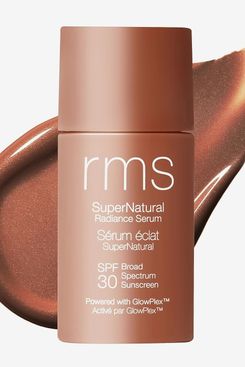
SPF level: SPF 30 | Chemical or mineral: Mineral | Consistency: Serum
This sunscreen from RMS Beauty ticks two boxes — the lightweight feel of a serum and a mineral sunscreen without a white cast. It’s a favorite of writer and podcast producer Mbiye Kasonga, who told us about it last year.“This is the first mineral sunscreen I’ve found that I can wear with confidence,” she says of the formula, which comes in three versatile shades. It also has some skin-care benefits, like peptides derived from quinoa seed and niacinamide, which help to support the skin’s barrier and increase skin’s hydration.
Best sunscreen with self-tanner
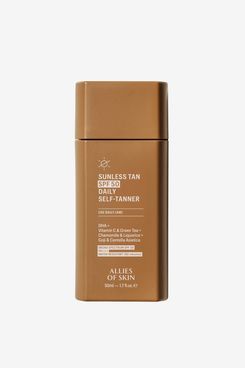
New! You can now save this product for later.
SPF level: SPF 50 | Chemical or mineral: Chemical | Contains oxybenzone, homosalate, and octisalate: Avobenzone: 3%, Homosalate: 7.3%, Octocrylene: 7.5%, Octisalate: 5%| Consistency: Lightweight lotion
One of my favorite parts of summer is that my skin tone deepens, which I typically achieve by skipping the sunscreen a few days a week. I know that I’m risking sun damage by doing this and possibly making my hyperpigmentation worse. This sunscreen from Allies of Skin solves this conundrum by gradually tanning skin over time using DHA, a sugar that temporarily tans skin. It also contains antioxidants like vitamin C and goji berry, along with green tea, centella asiatica, licorice root, and chamomile, which help to soothe skin and reduce inflammation. Another bonus: the smell. On its face, a self-tanner and sunscreen combo sounds like a chemically scented nightmare, but this one smells delicious — so much so that I’m tempted to lick it (for the record, I did not). It manages to achieve this without added fragrance, which feels like a feat. The only drawback is that it does have a little pigment, so you’ll want to make sure to wash it off at the end of the day (as you should with all SPF).
Some more sunscreens for your face we’ve written about
Our experts
• Dr. Dendy Engelman, dermatologic surgeon at Shafer Clinic Fifth Avenue
• Dr. Francesca Fusco, dermatologist at Wexler Dermatology
• Dr. Nava Greenfield, dermatologist at Schweiger Dermatology
• Kaleigh Fasanella, writer
• Dr. Corey L. Hartman, founder of Skin Wellness Dermatology
• Dr. Kenneth Howe, dermatologist
• Elizabeth Hand, esthetician and founder of Stalle Studios
• Dr. Jared Jagdeo, dermatologist and medical director of Ever/Body
• Dr. Karan Lal, dermatologist
• Dr. Jennifer MacGregor, dermatologist at Union Square Laser Dermatology
• Dr. Marnie Nussbaum, dermatologist
• Dr. Melanie Palm, dermatologist
• Dr. Caroline Robinson, founder of Tone Dermatology
• Dr. Jennifer Stein, dermatologist at NYU Langone Health
• Dr. Patricia Wexler, dermatologist at Wexler Dermatology
• Kim Zimmerman, director of e-commerce and marketing at Rescue Spa
The Strategist is designed to surface the most useful, expert recommendations for things to buy across the vast e-commerce landscape. Some of our latest conquests include the best women’s jeans, rolling luggage, pillows for side sleepers, ultra-flattering pants, and bath towels. We update links when possible, but note that deals can expire and all prices are subject to change.
Every editorial product is independently selected. If you buy something through our links, New York may earn an affiliate commission.